New Valentin

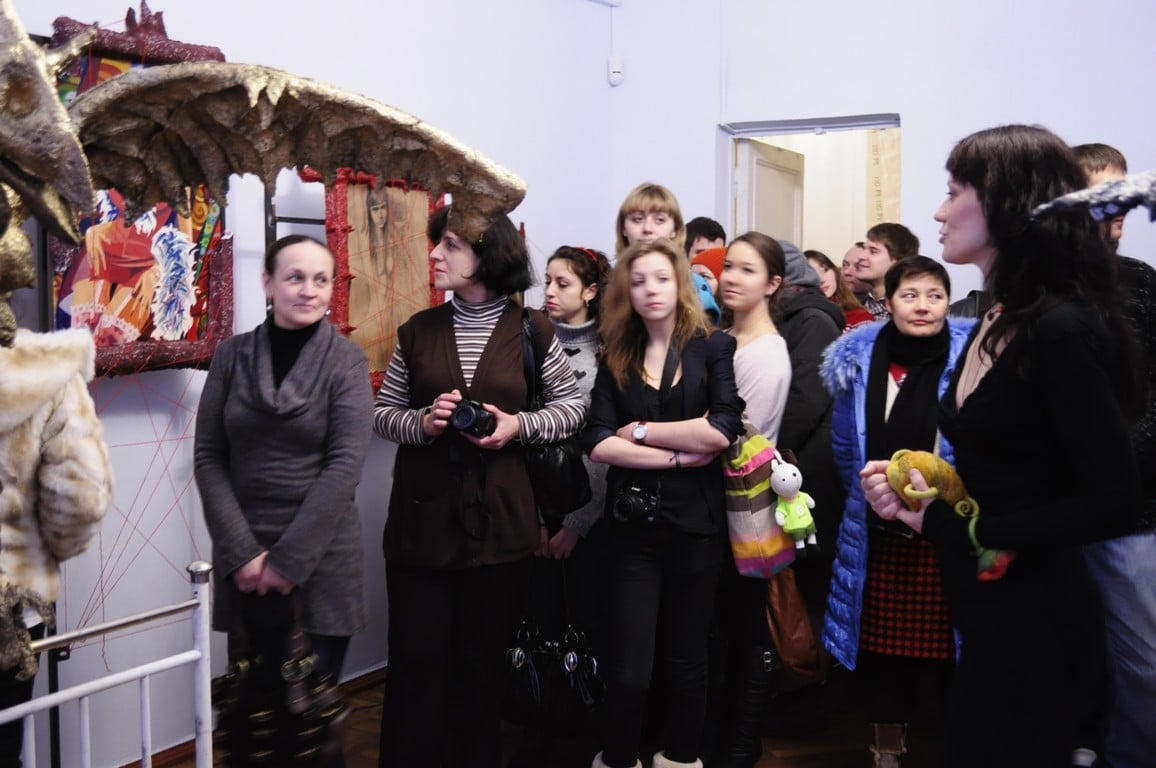
On 1 February at 16:00 the Cherkasy Art Museum opens an exhibition dedicated to St Valentine’s Day.
Behind the rush of hearts, chocolate and flowers that takes hold of people on the eve of this holiday, the figure of the man himself — Valentine — is forgotten.
Who was he really: a preacher carrying a new faith? A healer who relieved bodily and spiritual suffering? The project “New Valentine”, created by the artists’ group “DD”, will try to answer these questions.
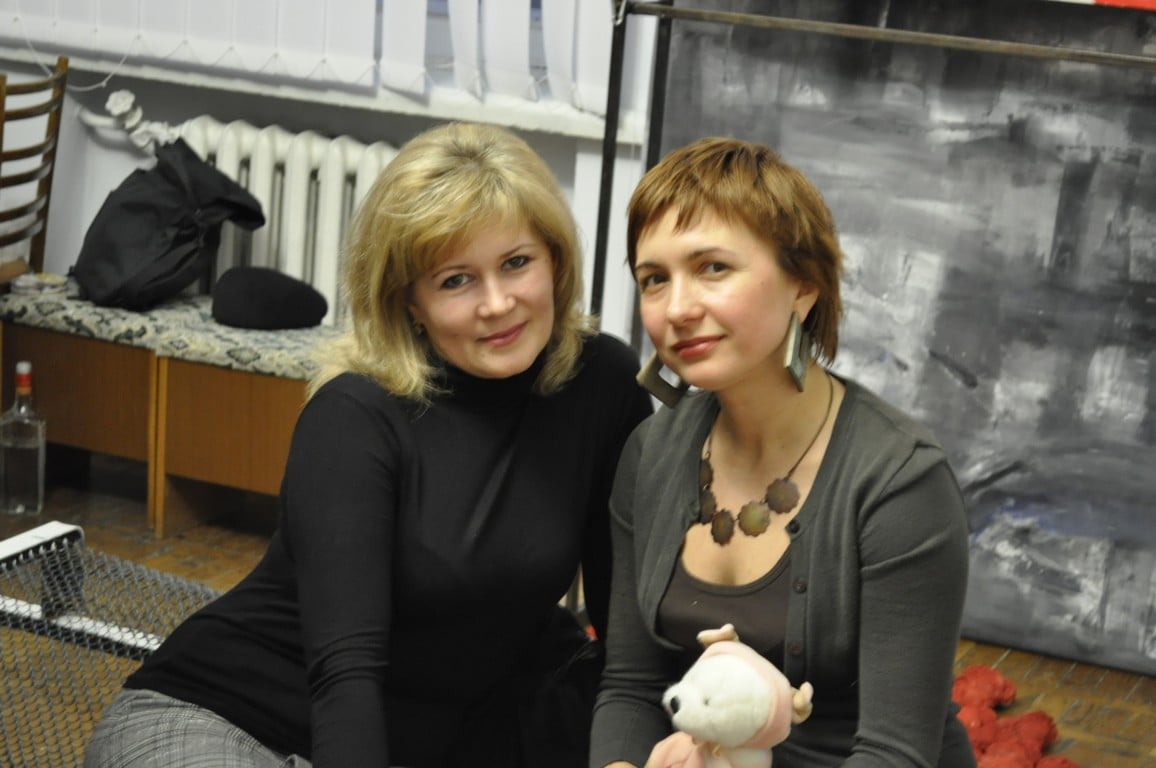
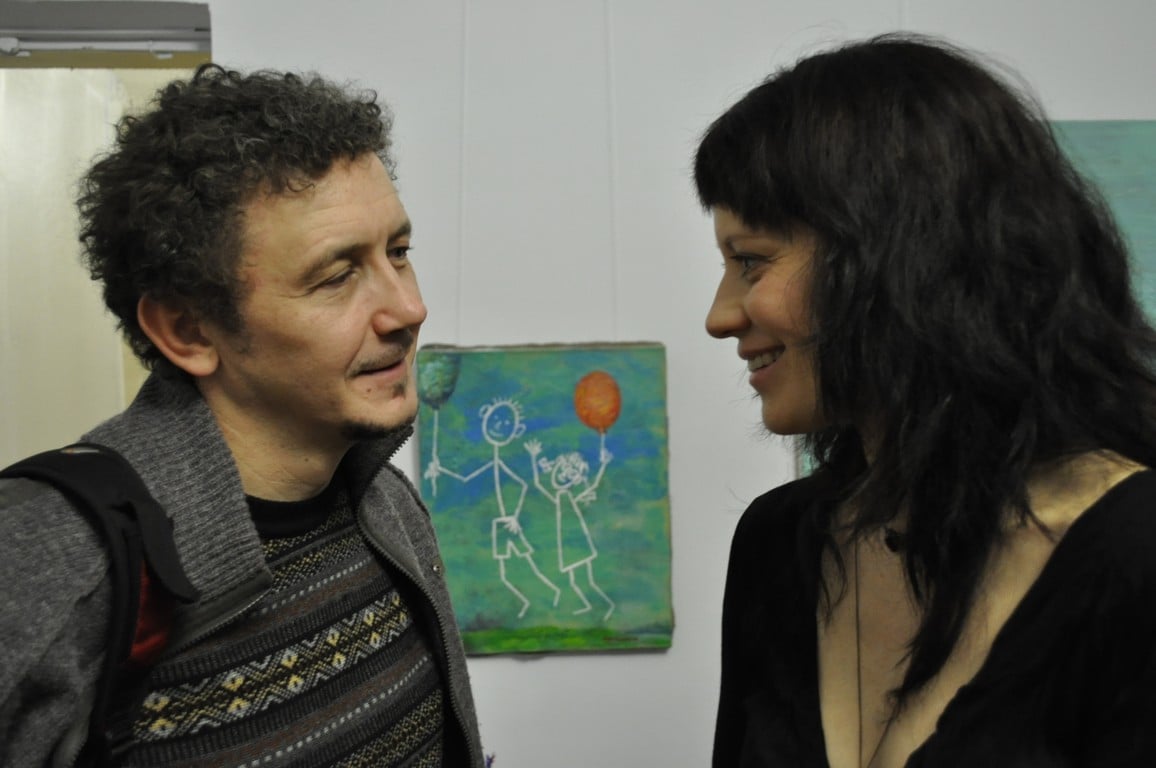
Taking part: Olha Sokurenko, Tetiana Cherevan, Oleksandr Duvinskyi, Serhii Kozachenko, Yaroslav Mohyliov, Oleksandr Shepenkov, Mykola Dzetsina, Yevhen Yakshyn, Ruslan Plastun, Yevheniia Ruda. With the support of Inesa Musorina, Serhii Polishchuk, Hryhorii Pylnyk, Serhii Krasheninnikov, Olha Stepanian, Oleksandr Vavilkin.
The art project “New snt-Valentine”
The group of artists built a notional temple of St Valentine. The temple opened on 1 February. By analogy with the New New Year and the Old New Year, celebrated on 1 and 14 January, the date of 1 February gave the project its name.
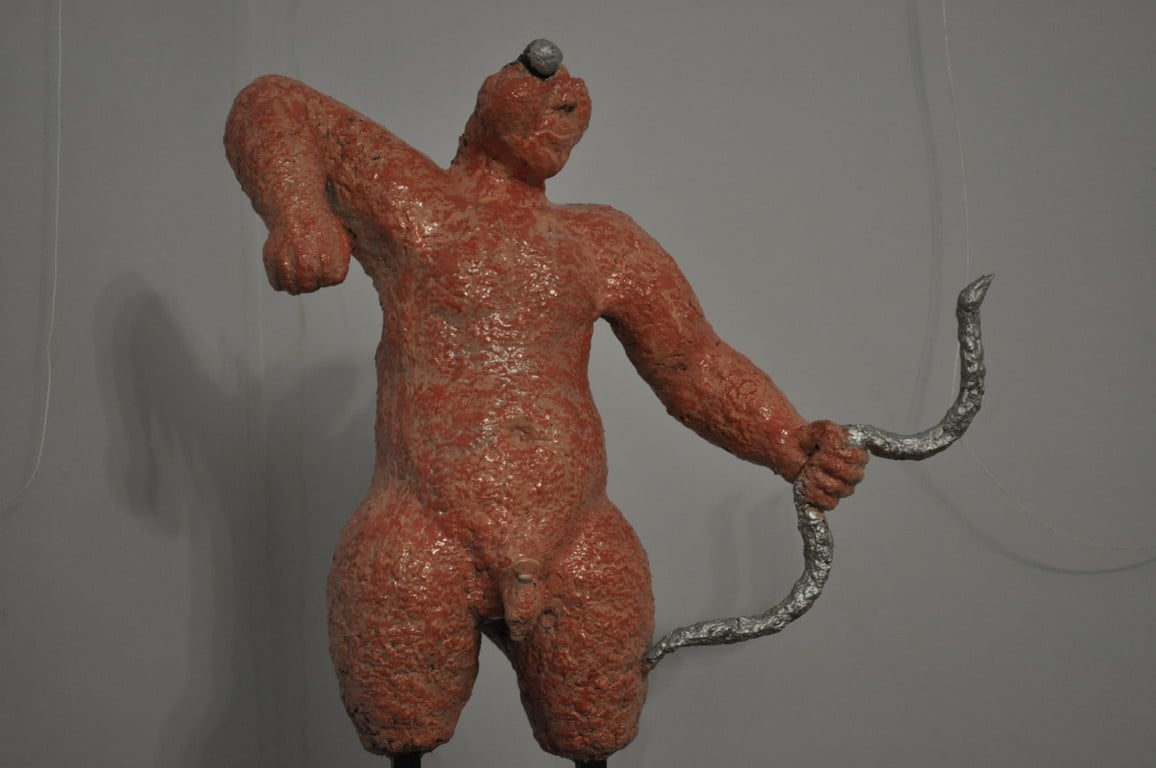
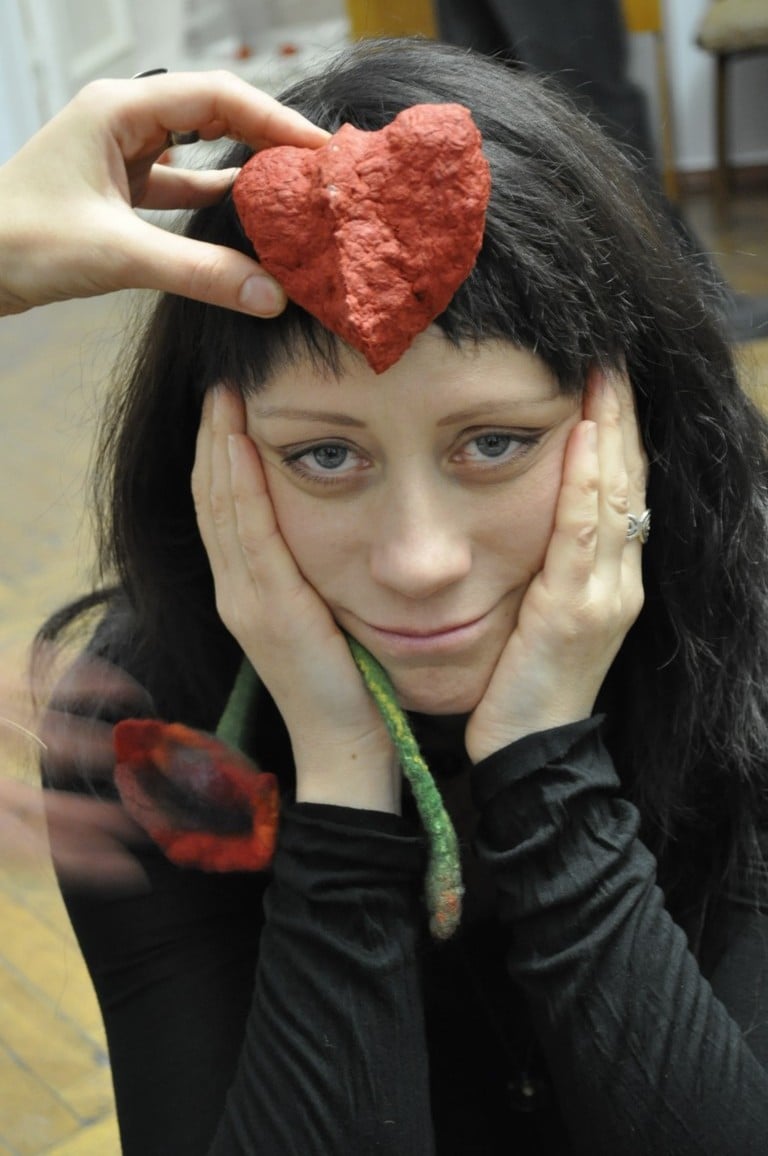
The entrance to the “temple” is framed by two guardians (Yevhen Yakshyn, “Modern Love”) and an amulet — symbols of the feminine and the masculine. To get inside, the viewer has to pass through a labyrinth, watching their step: it is easy to tread on someone’s heart and crush it.
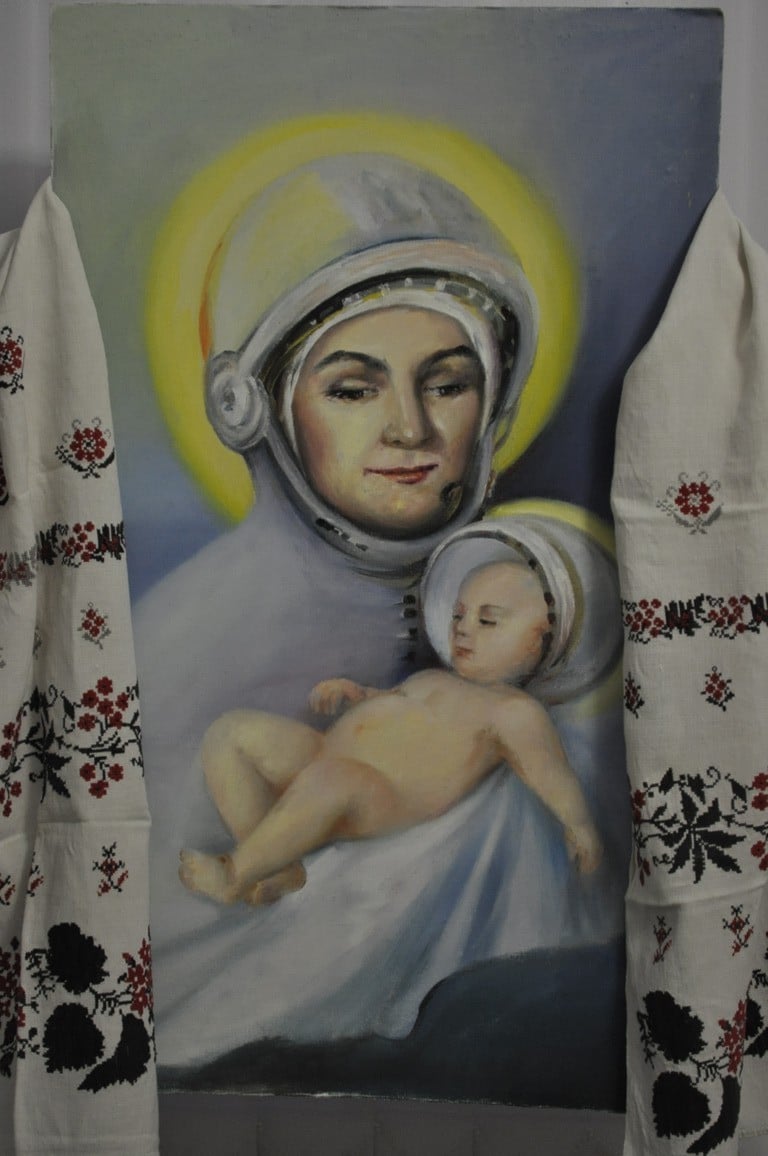
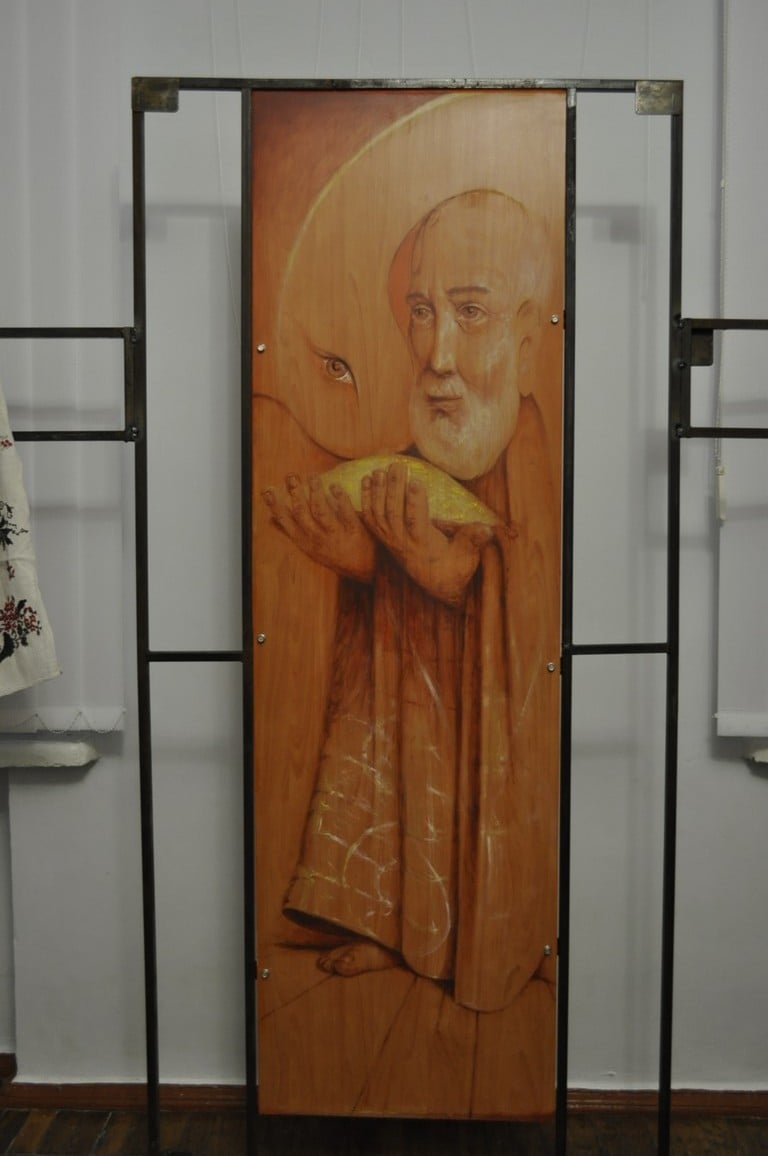
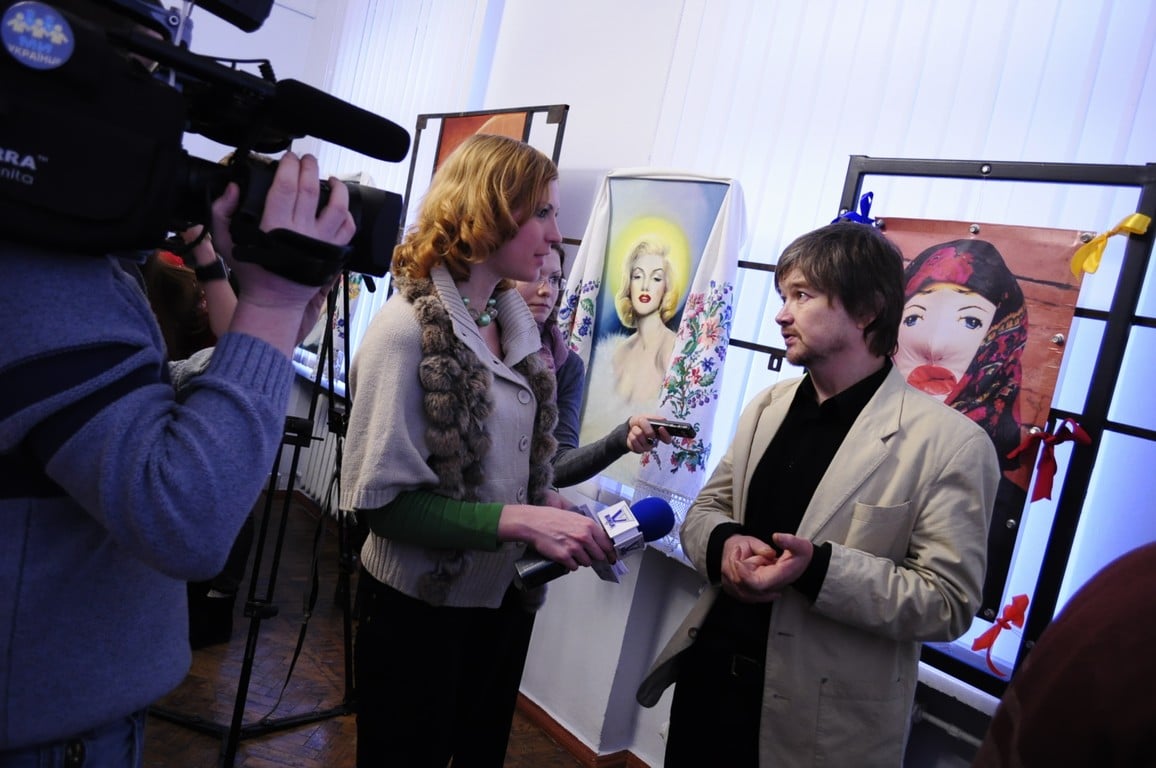
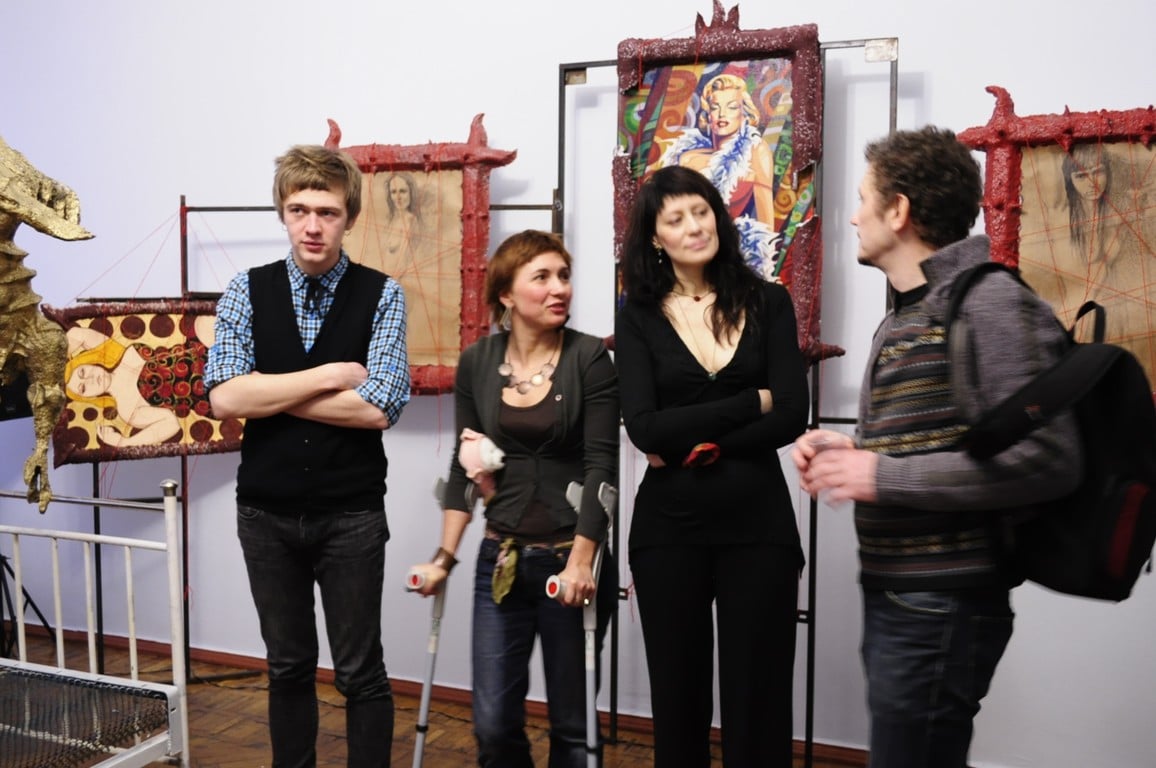
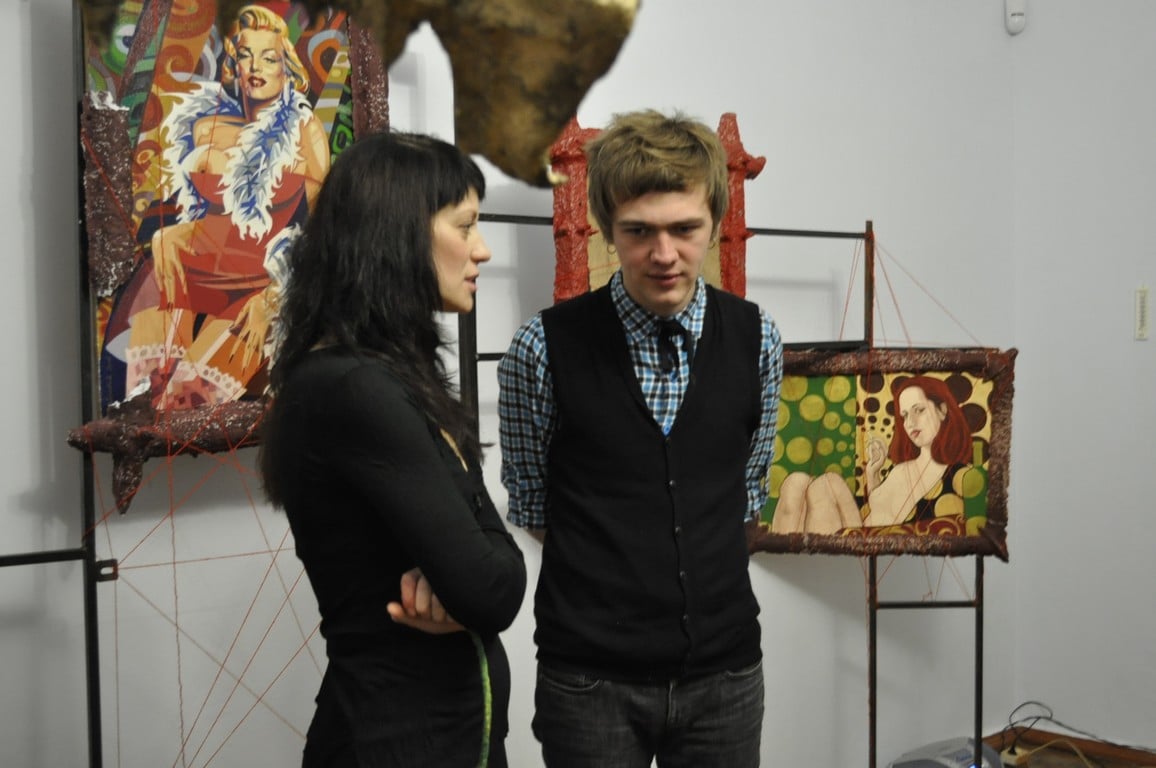
Inside, the viewer finds all the objects a temple requires. An iconostasis with an image of St Valentine (Yaroslav Mohyliov, “St Valentine gives humanity something necessary but incomprehensible”) and “icons” of the righteous women. Framed in rushnyky, the portraits of Norma Jeane — loved by the whole world until it loved her to death — and of Valentina Tereshkova, who made a spaceflight for love’s chief purpose, the birth of a child, surround St Valentine. (Olha Sokurenko, “Valentina Tereshkova: a flight into space” and “Norma Jeane: loved to death”.)
Two more righteous women, or two aspects of one, embody submission, self-sacrifice and devotion. Chocolate Olenka, who gives her sweet body to everyone, and the Rubber Woman, who can silently bear the whole weight of male love. (Oleksandr Vavilkin, diptych “Sweet Olenka: from dawn to dusk”.)
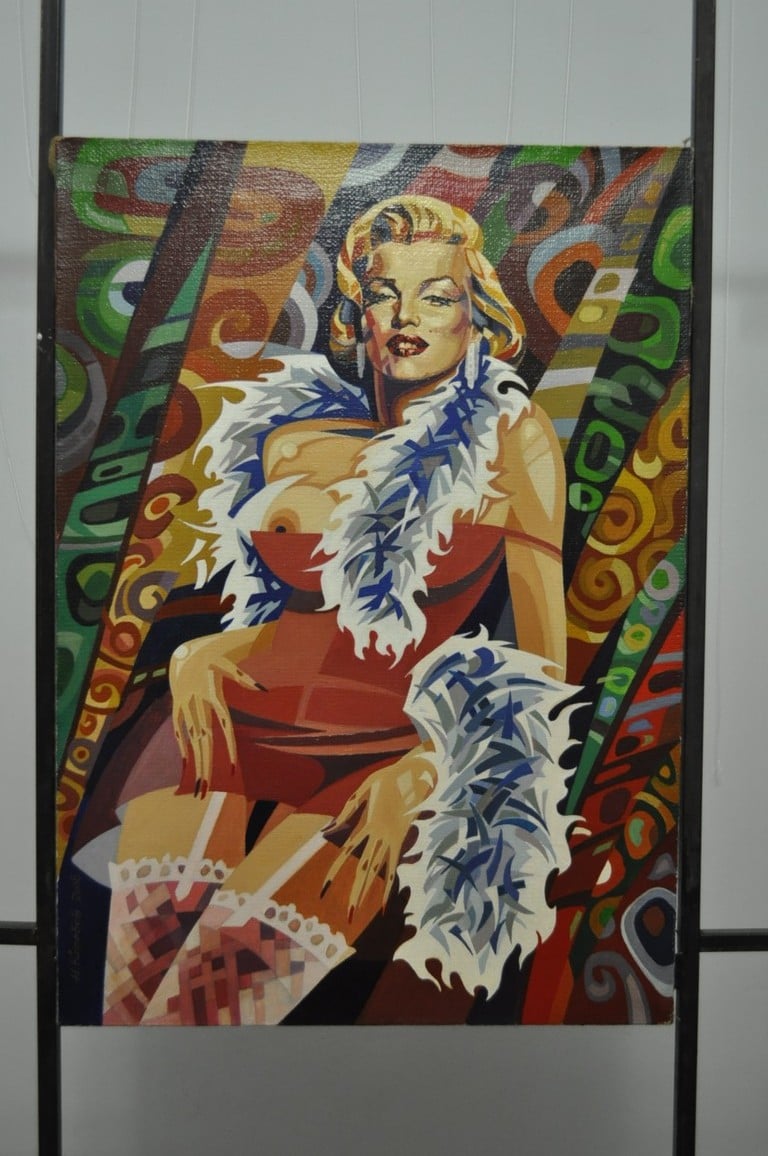
Opposite the saint and the righteous are images of sinful women tempted by a male shadow (Mykola Dzetsina, “Unknown sinners with the shadows of their tempters”) and of sinners able to tempt anyone themselves (Tetiana Cherevan, “Portraits of unknown sinners”). Marilyn Monroe was chosen as the chief sinner of the counter-stasis (Mykola Korobov, “Portrait of a very famous sinner”), her kaleidoscopic portrait placed opposite her own icon in the iconostasis. One and the same figure can be saint or sinner to us, depending on what we ourselves are able to see in a person.
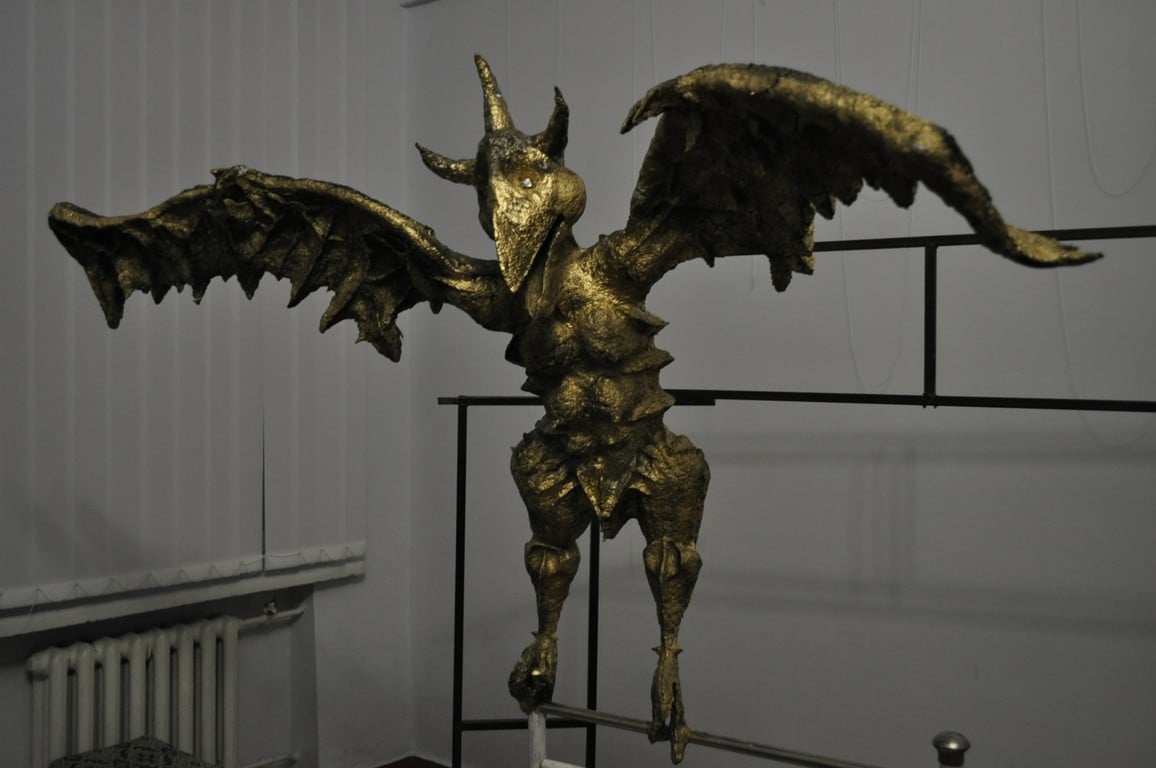
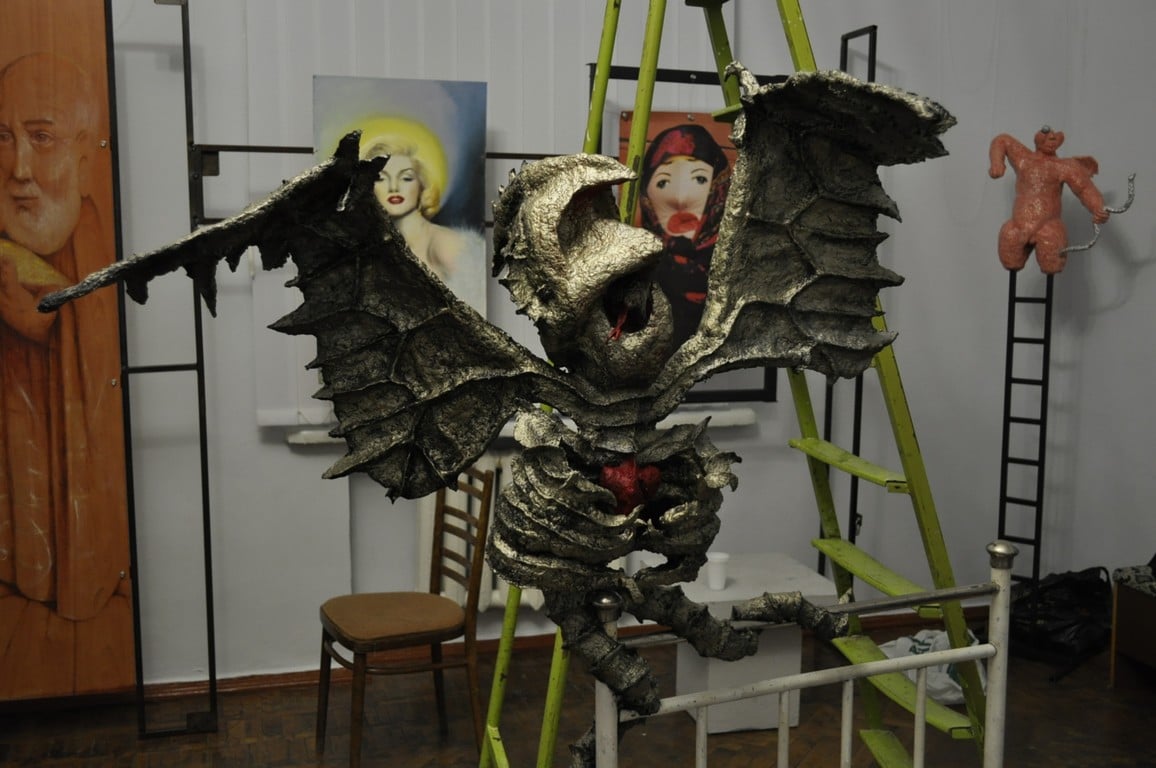
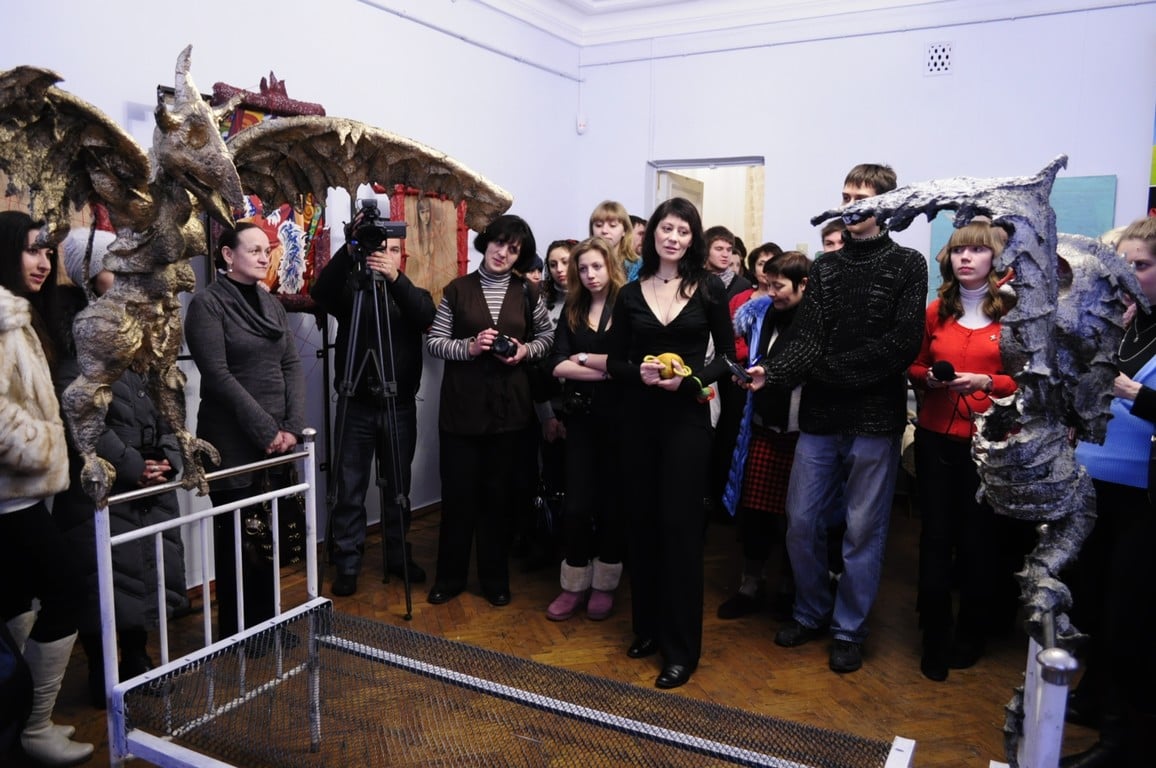
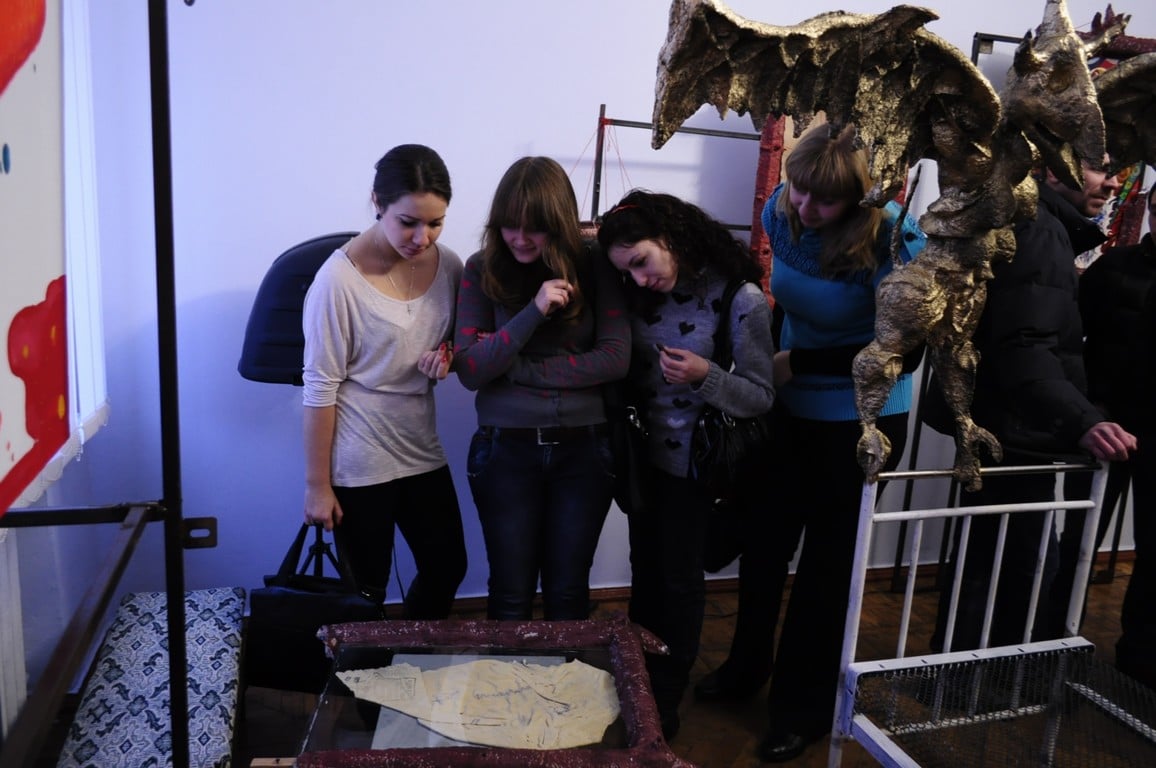
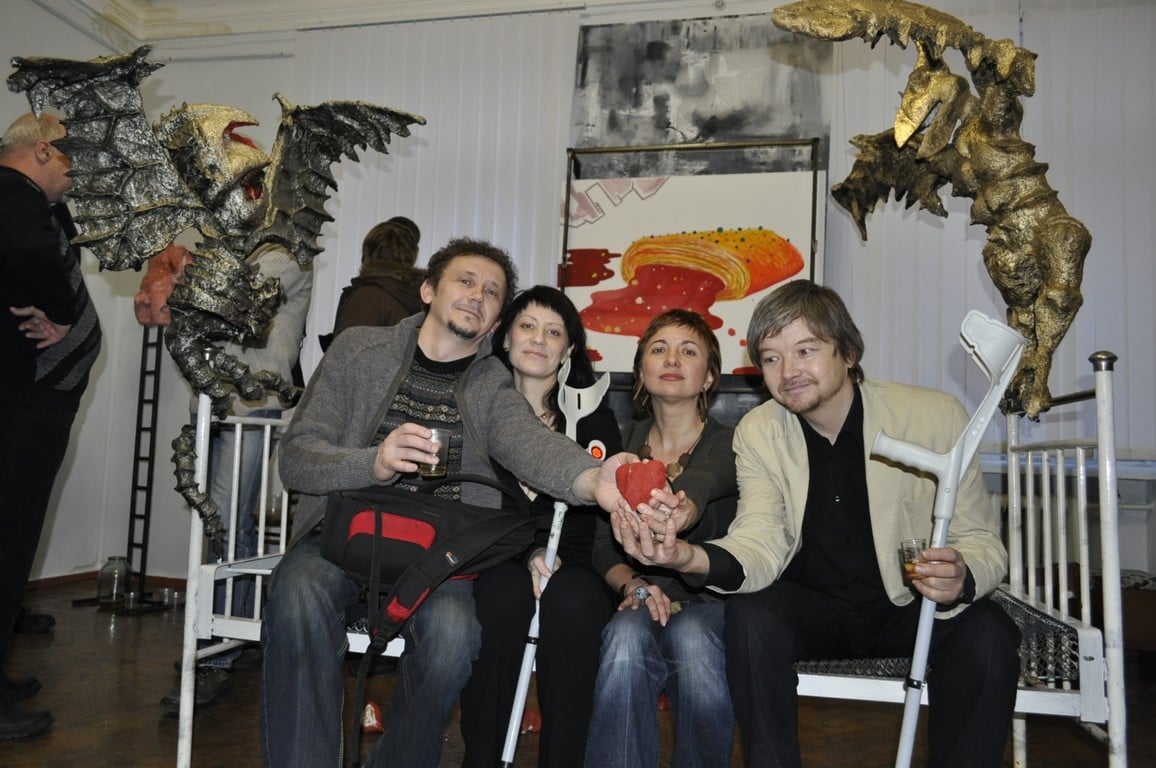
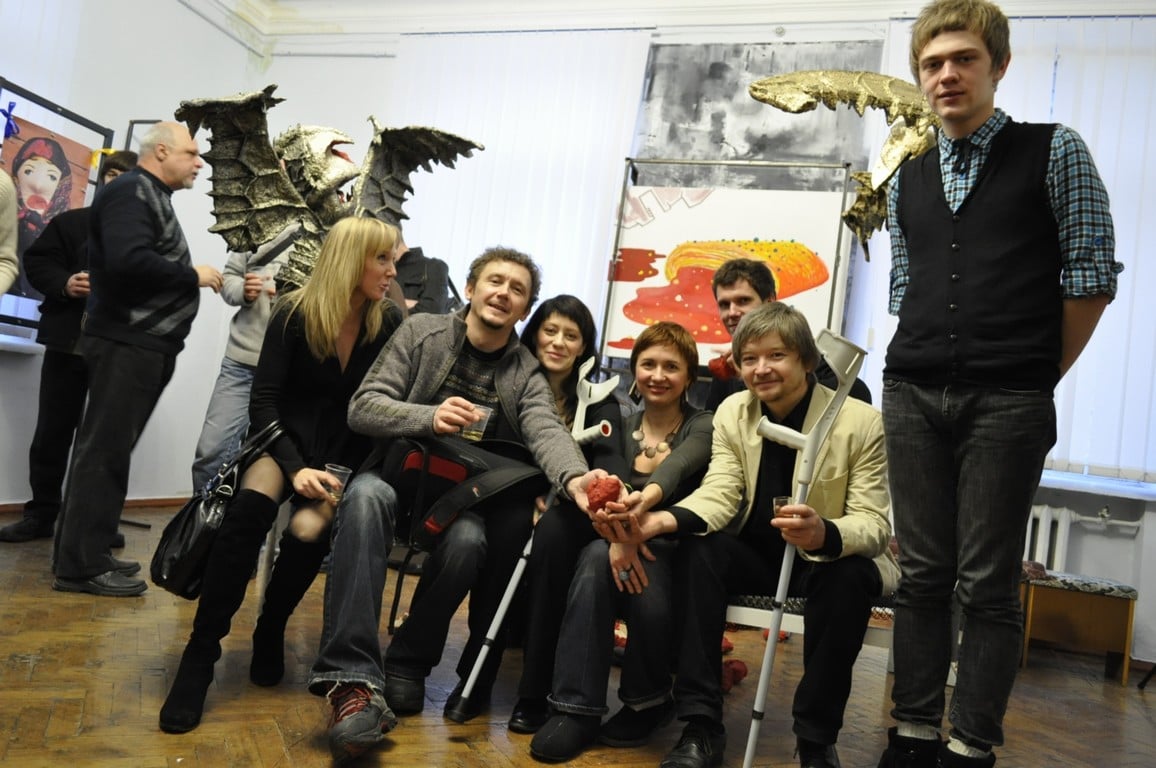
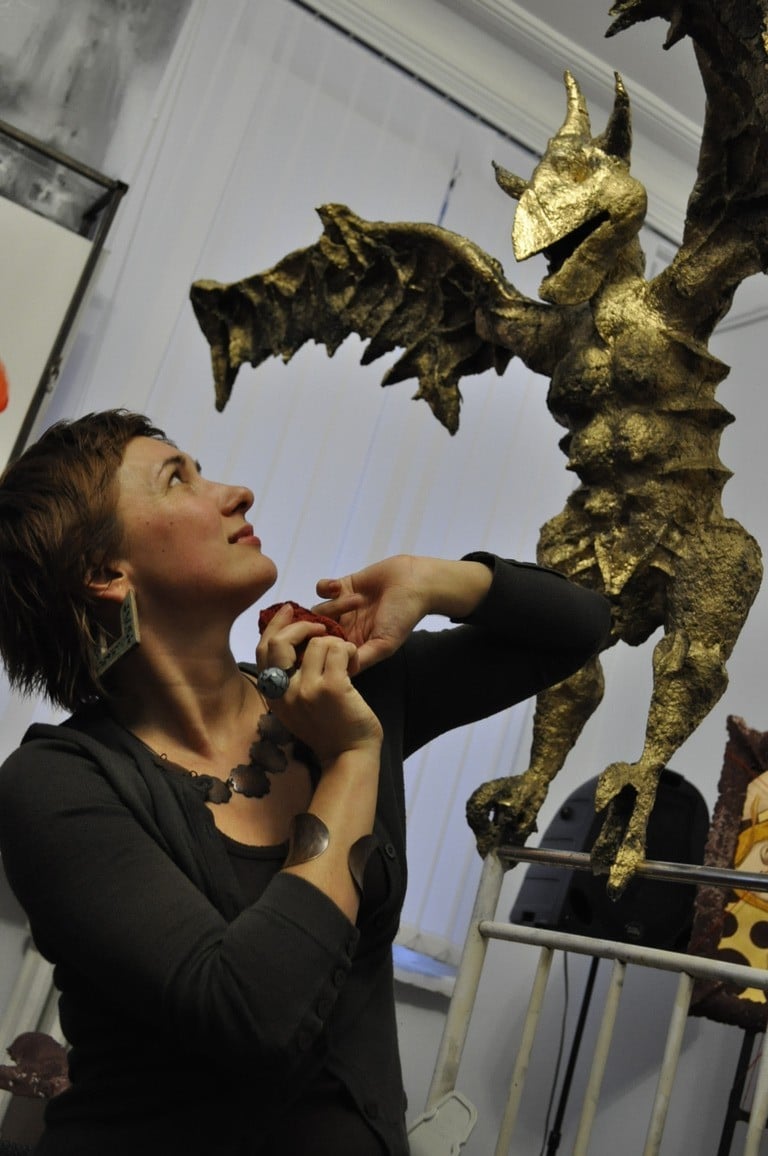
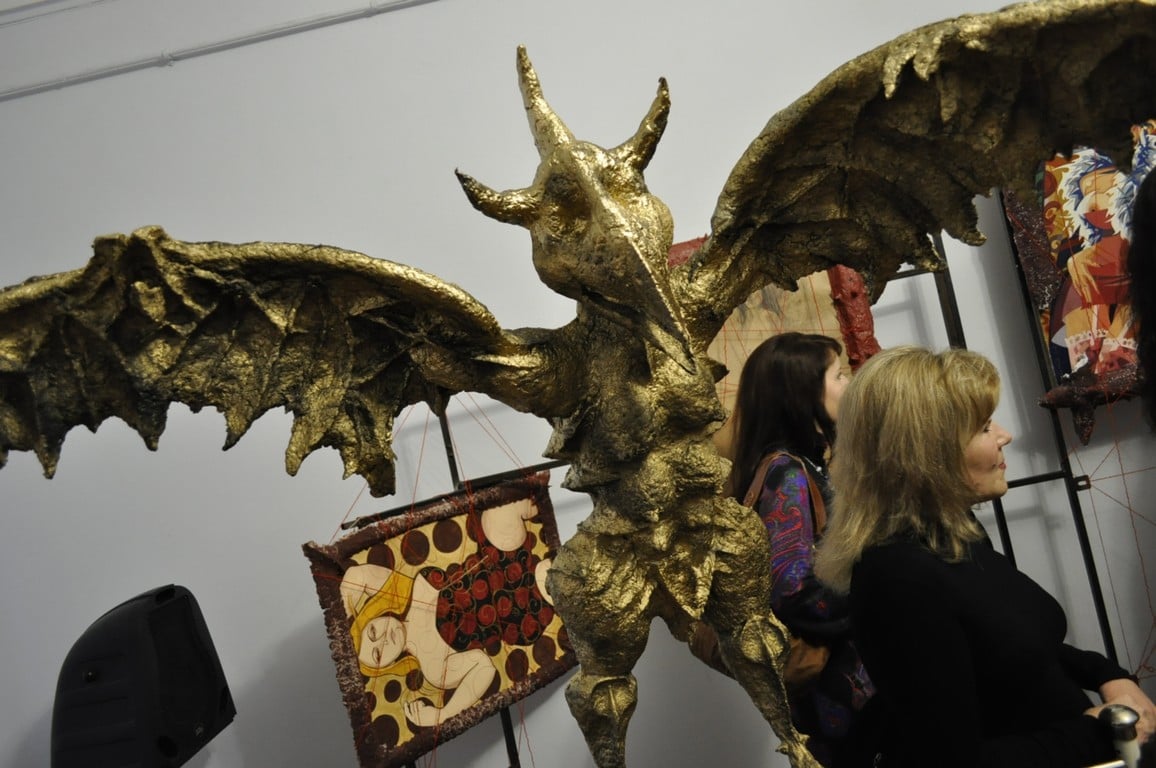
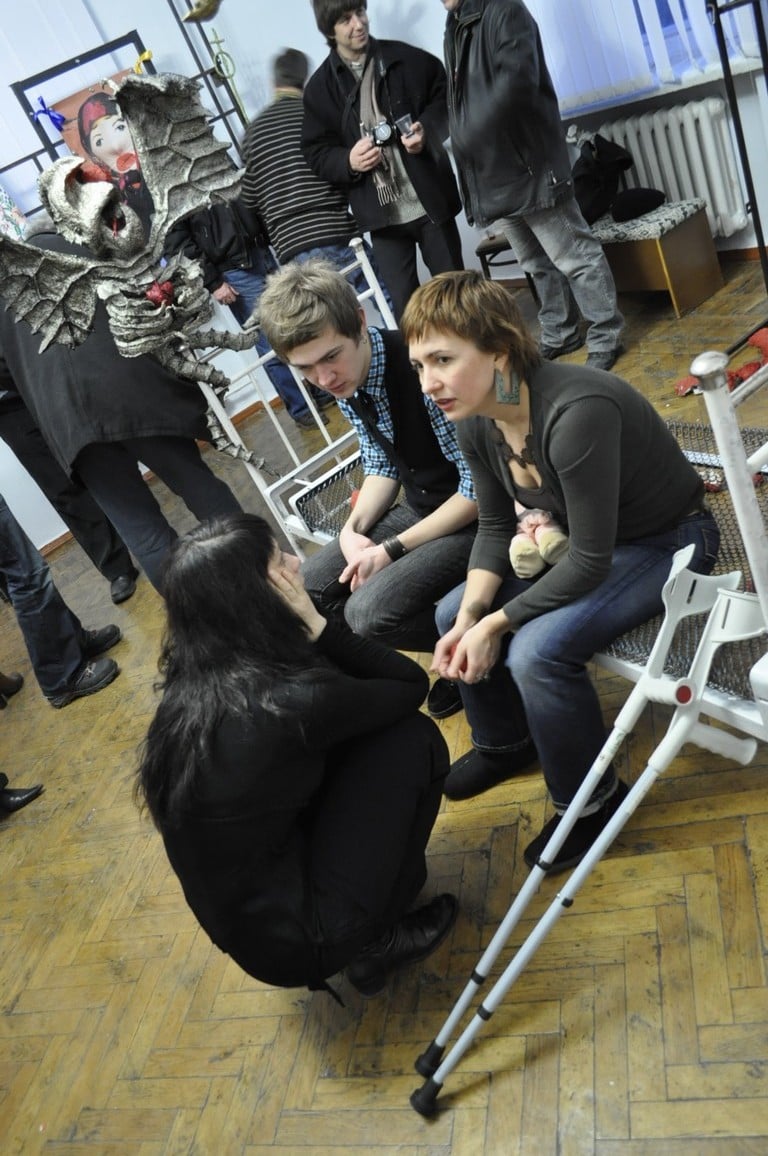
The role of the altar is played by an iron bed with gargoyles perched above it, embodying girlish and boyish fear of love. (Oleksandr Duvinskyi, “A bed of girlish and boyish fears”.) A couple in love can sit on the bed and, holding hands, make a shared wish.
Very often in our world people lay their love, their clean relationships, on the altar of material desire. The vivid strudel (Ruslan Plastun, “Strudel for two forty-five”) on the western wall is a symbol of love turned into an object of consumption — which any one of us can become. When real feeling is replaced by the urge to tear a partner apart and suck the sweet jam out of them, hearts fall to the floor and can be crushed.
Against the Strudel, the eastern wall holds optimistic works in which a person has overcome the material, dreams of love and flies to meet it (Oleksandr Shepenkov, diptych “Dreams of Valentine”).
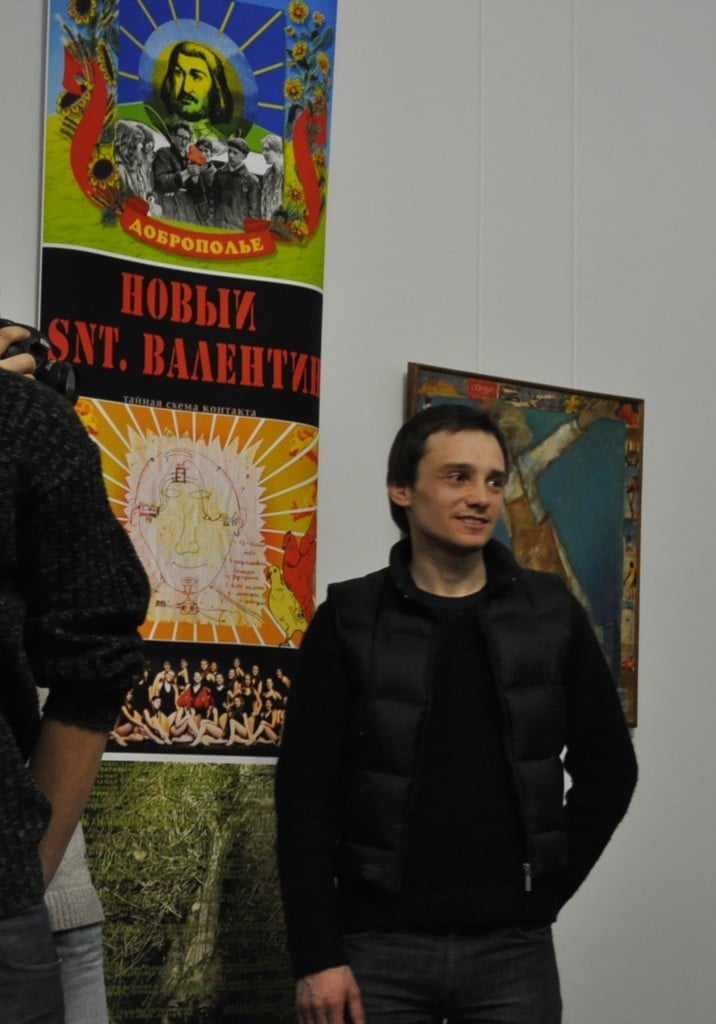
Posters dedicated to the New St Valentine show once more that the saint’s work was directed at goodness and human happiness. And a poster with a price list for wedding services in Prague warns the viewer once more that love can turn into a strudel. (Serhii Kozachenko, agitational posters, printed with the support of the Brama Ukraina company.)
The project is accompanied by a soundtrack — a musical setting of the wedding price list (Serhii Krasheninnikov, “A Prague wedding”).
Something very necessary to each of us, but incomprehensible, which St Valentine tried to bring us, is preserved in a jar and demands our attention and our guesswork. (Yevheniia Ruda, “Something very necessary but little understood”.)
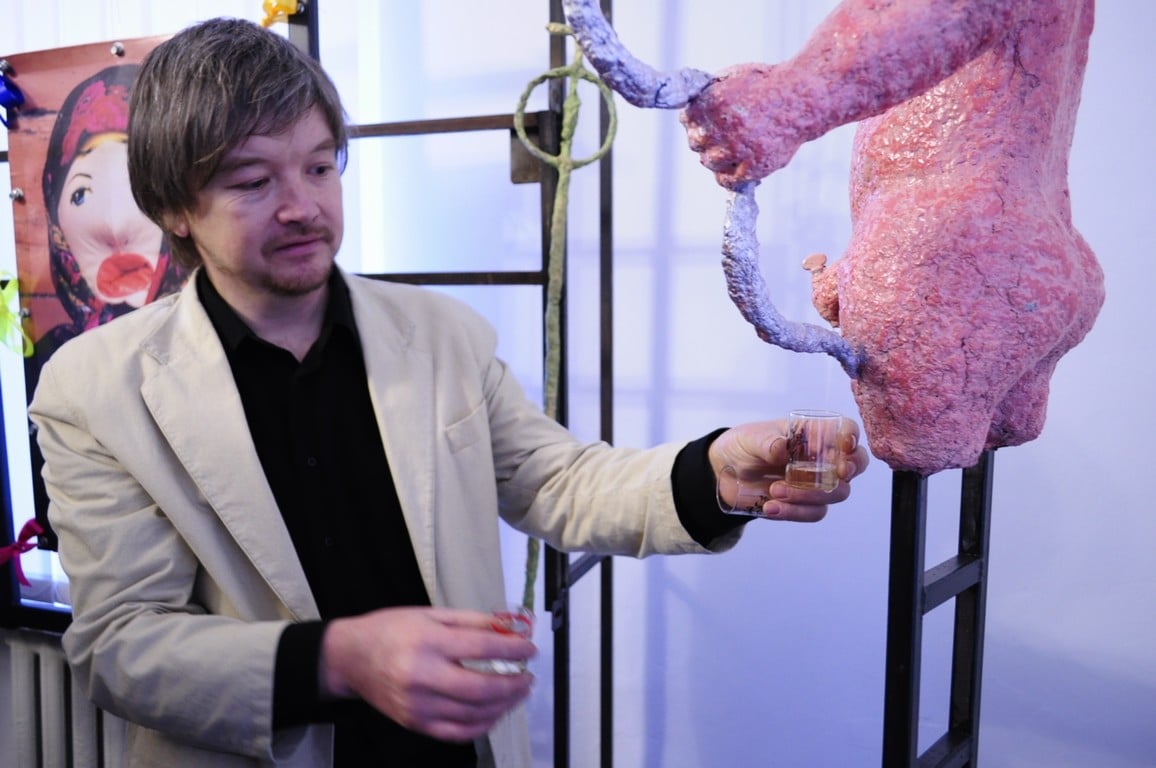
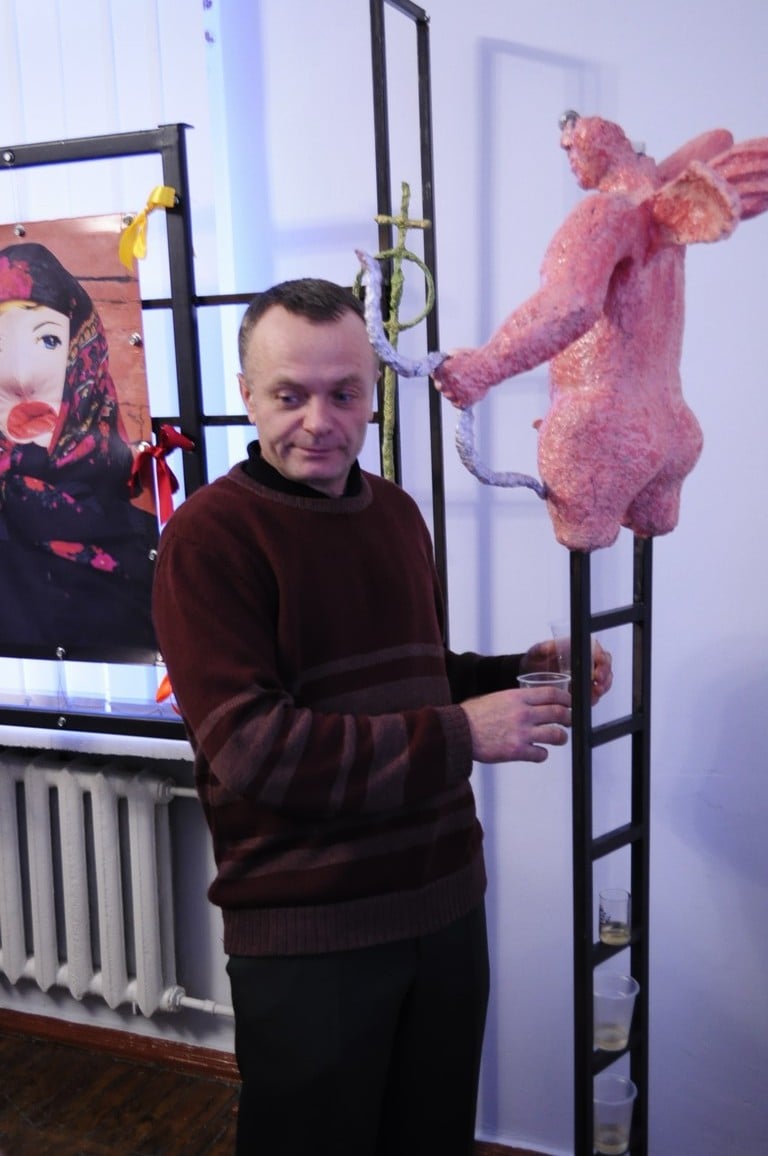
Everyone could take a sip of a magic drink from a vessel shaped like a small Cupid. Washing the magic drop down with Olenka’s chocolate body, one may hope for inevitable and happy love. (Oleksandr Duvinskyi, “Cupid the Faithful Eye”.)